

Introduction: The Great Leveler Has Arrived
In February 2026, a solo entrepreneur in Bengaluru can run a full e-commerce store, handle customer support 24/7, create personalized marketing campaigns, predict inventory needs, and analyze cash flow—all without hiring a single extra person. A local café owner uses AI to forecast demand for masala chai on rainy days, auto-order supplies, and even generate Instagram Reels that match the morning vibe.
This isn’t hype. Adoption stats tell the story: Over 57% of U.S. small businesses invested in AI by late 2025 (up dramatically from 36% in 2023), with many reporting 5–7 hours saved per employee weekly. Globally, small and medium enterprises (SMEs) are seeing AI shift from “nice-to-have” to essential infrastructure. For small businesses—those with fewer than 250 employees, often just 1–10 people—AI is democratizing capabilities once reserved for corporations with million-dollar budgets.
Why now? Affordable tools (many with free tiers), no-code platforms, agentic AI (systems that act autonomously), and cloud access have lowered barriers. In 2026, not adopting AI isn’t just falling behind—it’s risking irrelevance.
In this deep-dive, we’ll explore exactly how AI is reshaping small businesses: the real tools, measurable impacts, sector-specific examples, benefits that hit the bottom line, challenges that keep owners up at night, and practical steps to start today.


Section 1: The 2026 Adoption Landscape – Numbers Don’t Lie
Small businesses aren’t experimenting anymore—they’re depending on AI.
- Adoption explosion: 56–79% of small businesses use AI in some form, with marketing leading at 63%. 87% of users report positive impact.
- Daily reality: 30% of employees use AI daily; workers save an average 5.6 hours/week (managers save over 7 hours).
- Growth driver: LinkedIn reports AI as a “strategic asset” for resilience and scaling. High adopters redesign workflows for transformation, not just efficiency.
- One-person empires: Tools enable solo founders to handle what once required teams—content, sales, ops, support.
The shift is clear: AI levels the playing field. A 5-person shop can now compete with 50-person competitors on personalization, speed, and data smarts.
Section 2: Core Ways AI Is Transforming Operations
AI hits small businesses hardest in repetitive, time-sucking areas.
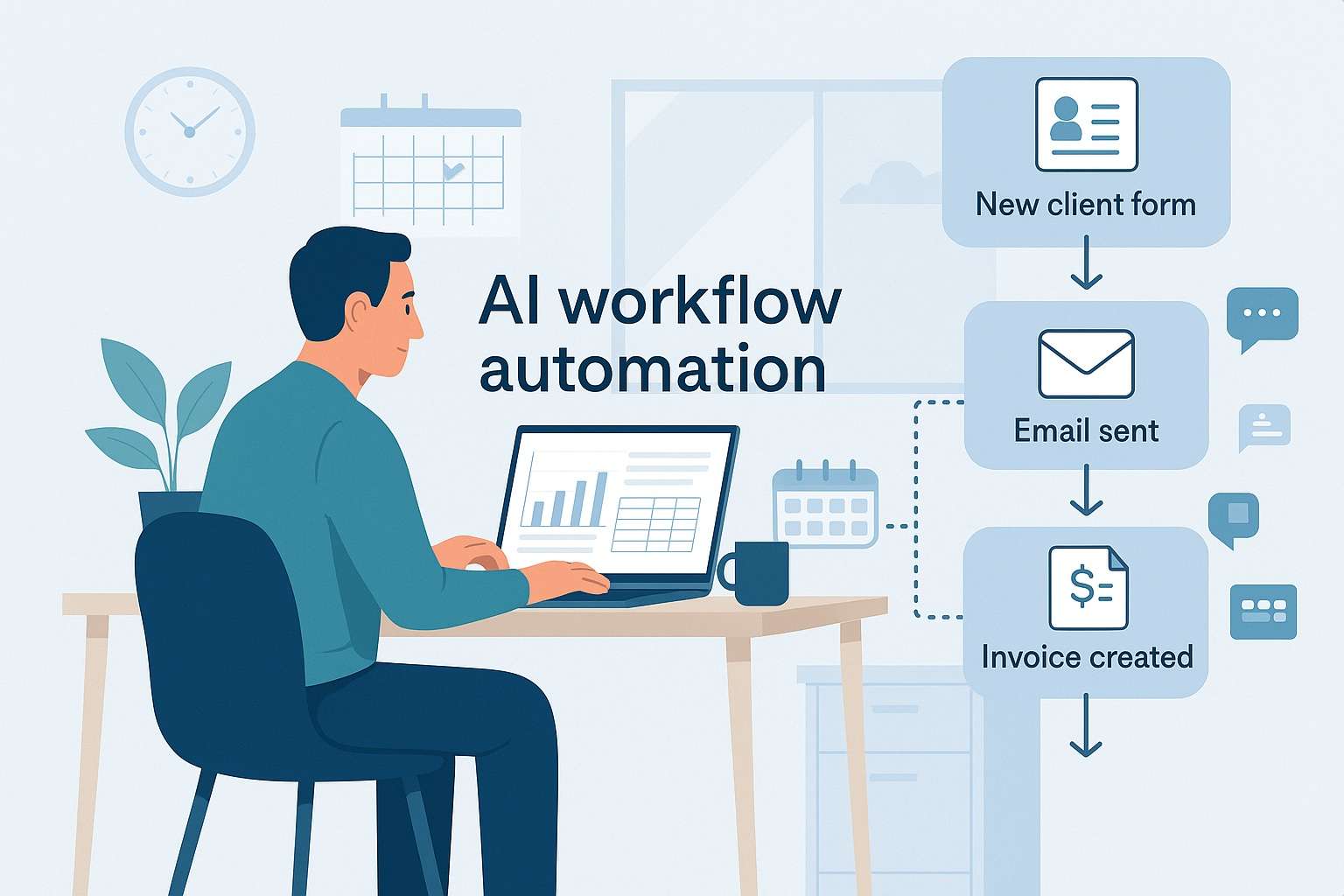
Automation of the Mundane Tools like Zapier AI, Make.com, or agentic platforms connect apps to automate workflows: new lead → auto-email → CRM update → invoice. Owners report slashing admin time by 40–60%.
Customer Service Revolution AI chatbots (ChatGPT-powered, Intercom AI, Tidio) handle 70–80% of queries 24/7. Sentiment analysis routes complex issues to humans. Result: faster responses, happier customers, less burnout.
Marketing & Content at Scale Generative AI (Jasper, Copy.ai, Claude) drafts social posts, emails, blogs. Tools like Surfer SEO optimize for search. Pictory turns text into videos. Small brands now produce enterprise-level content weekly.
Data-Driven Decisions AI analytics in tools like QuickBooks AI, Google Analytics with AI insights, or custom dashboards spot trends: “Your peak sales hour shifted—adjust staffing.”

Section 3: Sector-Specific Transformations
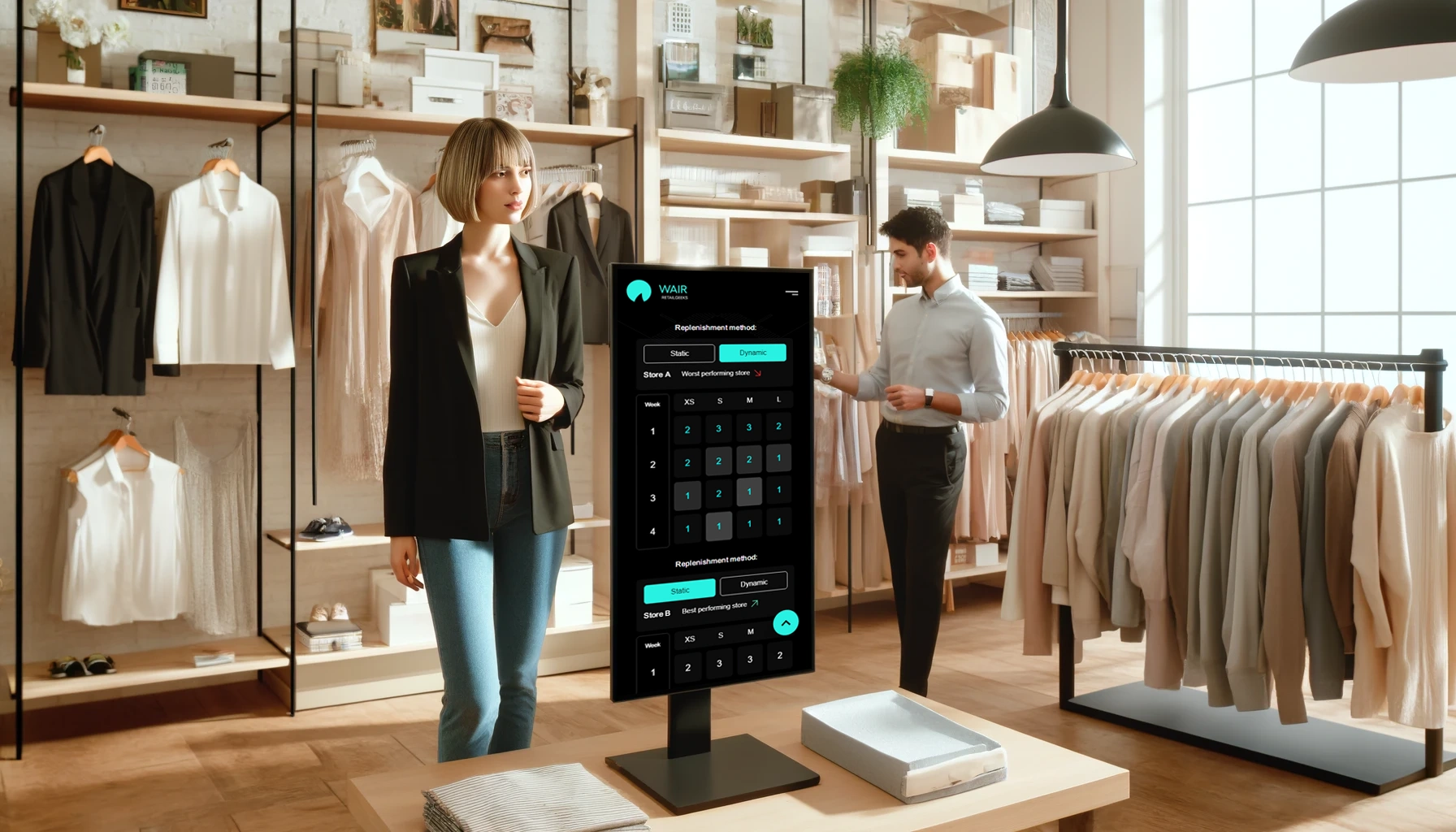
Retail & E-commerce AI inventory tools (like Wair) use predictive analytics to avoid stockouts/overstock. Dynamic pricing adjusts in real-time. Visual search (“find similar dresses”) boosts conversions 20–30%. Smart shelves detect low stock.

Services & Consulting AI schedules appointments (Calendly AI), transcribes calls (Fireflies.ai), summarizes meetings, drafts proposals. Personalized follow-ups increase close rates.
Food & Hospitality Demand forecasting predicts busy nights. AI menus suggest pairings. Chatbots handle reservations/bookings.
Professional Services (Accountants, Lawyers) AI scans documents, flags issues, automates bookkeeping. Tools like Harvey.ai draft contracts.
Creative & Media AI generates logos, ad copy, videos—speeding ideation while owners focus on strategy.
Section 4: The Standout Tools Powering Small Businesses in 2026
Practical, affordable winners:
- ChatGPT/Claude/Gemini — Everyday brain: emails, ideas, code, research.
- Zapier AI / Make — No-code automation connecting 7,000+ apps.
- Jasper / Copy.ai — Marketing copy in brand voice.
- Canva Magic Studio — Design with AI edits.
- Fireflies / Otter — Meeting notes/transcripts.
- HubSpot / Zoho CRM AI — Lead scoring, personalized outreach.
- QuickBooks AI / Xero — Cash flow predictions.
- Midjourney / DALL-E — Custom visuals.
- Perplexity / You.com — Faster research.
Many start free or <$20/month—ROI often in weeks.
Section 5: Real Benefits Hitting the Bottom Line
- Cost savings: Automate what costs salaries—marketing, support, admin.
- Revenue growth: Personalized marketing lifts conversions 15–40%. Better forecasting cuts waste.
- Time freedom: Owners reclaim hours for strategy, family, innovation.
- Competitive edge: Small teams act like big ones—hyper-personalization, fast iteration.
- Resilience: AI spots risks (cash dips, trends) early.
High performers redesign workflows for transformation: new products, models, experiences.


Section 6: The Challenges – No Rose-Tinted Glasses
AI isn’t magic. Real hurdles:
- Tool overload & burnout: Too many apps create “AI fatigue.”
- Data privacy/security: Small businesses handle customer data—breaches hurt more.
- Skill gaps: Many owners lack AI literacy; training needed.
- Bias & errors: Bad data = bad decisions. Hallucinations in content.
- Job fears: Though only 12% plan staff cuts, anxiety exists.
- Cost creep: Free tiers end; scaling adds up.
- Over-reliance: Losing human touch risks impersonal service.
Mitigation: Start small, audit outputs, prioritize privacy-focused tools, upskill via free resources.
Section 7: The Near Horizon – 2026–2028 Trends for Small Businesses
- Agentic AI dominance: Agents book, research, execute (e.g., “Plan my Q2 marketing”).
- On-device & privacy-first: Local processing reduces cloud risks.
- AI Studios: Owners create “command centers” for reusable AI assets.
- Human-AI hybrid skills: Communication, creativity trump pure tech.
- Sustainability angle: AI optimizes energy, waste—appeals to conscious customers.
Small businesses adopting early gain outsized advantages.
Conclusion: Your Move in the AI Era
AI isn’t replacing small business owners—it’s empowering them to build faster, smarter, leaner. The gap between adopters and non-adopters widens daily. In 2026, the question isn’t “Should I use AI?” but “How can I use it to win?”
Start simple: Pick one pain point (customer support? content? forecasting?), test a free tool this week, measure results. Iterate. The future belongs to those who adapt thoughtfully.
What’s one AI tool already saving you time—or one you’re curious to try? Share in the comments—let’s learn from each other.
Sources drawn from PwC, McKinsey, Deloitte, LinkedIn, Forbes, U.S. Chamber, and real-world SMB reports as of February 2026.