
Introduction: Why “The Cloud” Is Everywhere in 2026 – And Why You Should Care
It’s February 24, 2026, and you’re reading this on a device that’s probably syncing your photos, streaming music, running AI chats, and backing up files—all without you owning a single server room. That magic? It’s cloud computing.
In 2026, cloud isn’t futuristic tech—it’s the invisible backbone of modern life and business. Global cloud spending is skyrocketing toward trillions annually, powering everything from Netflix recommendations to AI agents in your apps, remote work tools, and even small business operations in Bengaluru.
But what is cloud computing exactly? How does it actually work? Why do companies ditch their own servers? And which model fits your needs—whether you’re a student, developer, small business owner, or just curious?
This comprehensive beginner-to-intermediate guide answers all that. We’ll break down definitions, service models (IaaS, PaaS, SaaS), deployment types, major providers, real everyday examples, benefits, challenges, 2026 trends, and a simple roadmap to get started. No jargon overload—just clear explanations with 2026 updates.
By the end, you’ll understand why “select cloud computing” means choosing the right tools to save money, scale fast, and innovate without massive upfront costs.
Section 1: What Exactly Is Cloud Computing? (Simple 2026 Definition)
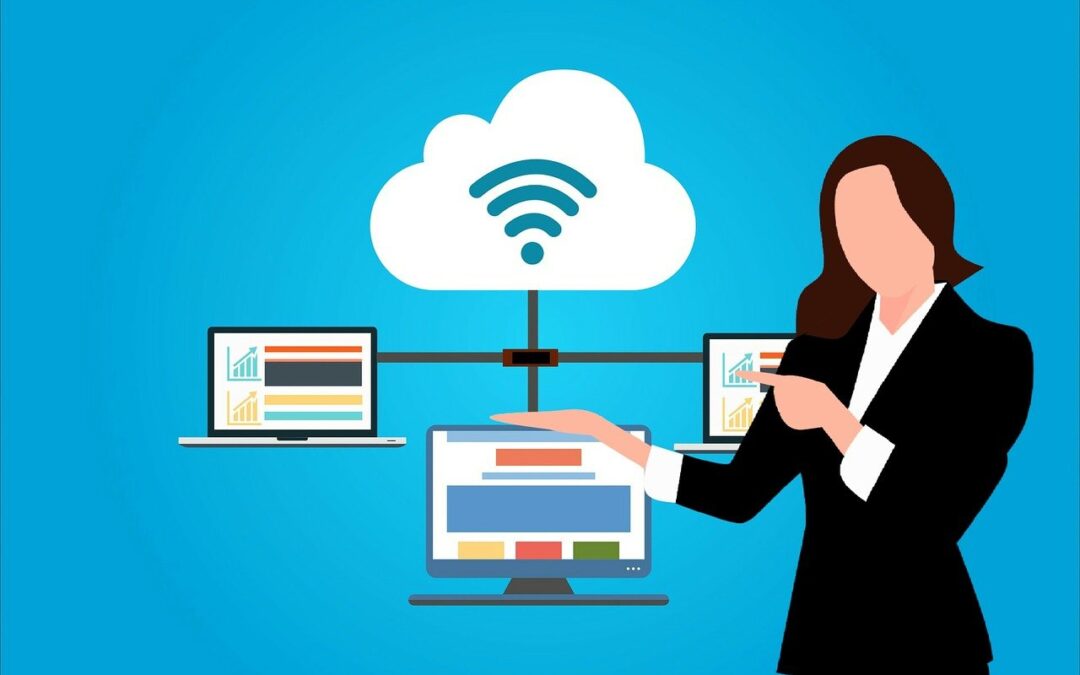
Cloud computing is the on-demand delivery of computing resources—servers, storage, databases, networking, software, analytics, AI, and more—over the internet (“the cloud”) instead of buying and maintaining physical hardware yourself.
You pay only for what you use (pay-as-you-go), scale instantly (add 100 servers in minutes), and access everything from anywhere with internet.
Think of it like electricity: In the old days, factories generated their own power. Today, you flip a switch and pay the utility company. Cloud is the same for computing power.
Core characteristics (NIST definition, still valid in 2026):
- On-demand self-service
- Broad network access
- Resource pooling
- Rapid elasticity
- Measured service (pay-per-use)
In 2026, cloud powers AI workloads, edge computing for IoT, and hybrid setups where companies mix on-prem with cloud for security/compliance.
Section 2: The Three Main Service Models – IaaS, PaaS, SaaS Explained
The “as-a-Service” part confuses beginners, but it’s simple: different layers of responsibility.
1. IaaS (Infrastructure as a Service) You rent the raw building blocks: virtual machines, storage, networks. You manage OS, apps, data, security patches. Provider handles hardware/data centers.
Examples: AWS EC2, Azure Virtual Machines, Google Compute Engine. Best for: Developers who want full control, migrating legacy apps, custom setups. 2026 reality: Still dominant for AI training (GPU clusters on demand).
2. PaaS (Platform as a Service) Provider gives infrastructure + development platform (runtimes, databases, middleware). You focus only on code and data.
Examples: AWS Elastic Beanstalk, Google App Engine, Azure App Service, Heroku. Best for: App developers who hate server management, rapid prototyping. 2026 trend: Serverless PaaS (AWS Lambda, Azure Functions) explodes—no servers at all.
3. SaaS (Software as a Service) Fully managed apps delivered over internet. You just log in and use.
Examples: Google Workspace, Microsoft 365, Salesforce, Zoom, Dropbox, Canva. Best for: Everyone—businesses, students, individuals. No install, auto-updates. 2026: AI-infused SaaS everywhere (Copilot in Office, Gemini in Workspace).
Quick analogy pyramid:
- SaaS = renting a furnished apartment (use only)
- PaaS = renting kitchen + appliances (cook your food)
- IaaS = renting land + building materials (build everything)
Section 3: Deployment Models – Public, Private, Hybrid, Multi-Cloud
Public Cloud — Shared infrastructure (AWS, Azure, GCP). Cheapest, most scalable. Private Cloud — Dedicated for one organization (on-prem or hosted). Max control/security. Hybrid Cloud — Mix public + private (most enterprises in 2026). Multi-Cloud — Using 2+ public providers (avoid lock-in, best-of-breed).
2026 trend: Hybrid/multi-cloud is default for resilience and cost.
Section 4: Major Cloud Providers in 2026 – Who Rules the Sky?
- AWS — Still #1 market share, massive services (EC2, S3, Lambda, Bedrock for AI).
- Microsoft Azure — Strong in enterprises (Office 365 integration, AI via OpenAI).
- Google Cloud Platform (GCP) — Best for data/AI (BigQuery, Vertex AI), Kubernetes leader.
- Others: Alibaba (Asia dominance), Oracle, IBM, DigitalOcean (dev-friendly), Vercel/Netlify (frontend).
For beginners in India/Bengaluru: AWS/GCP free tiers + local data centers (Mumbai region) mean low latency.
Section 5: Real-Life Examples – Cloud in Your Daily 2026 Life
- Streaming Netflix/Spotify → SaaS + massive IaaS storage/CDN.
- Google Drive/OneDrive backups → SaaS storage.
- Zoom calls → SaaS with PaaS backend.
- Small business e-commerce (Shopify) → SaaS on cloud infra.
- AI tools like ChatGPT/Gemini → SaaS powered by hyperscale IaaS GPUs.
- Startups in Bengaluru using AWS free tier to launch MVPs overnight.
Cloud enables remote teams, global scaling, disaster recovery.
Section 6: Key Benefits of Cloud Computing in 2026
- Cost savings — Pay-per-use vs. buying servers (up to 70% lower for variable workloads).
- Scalability — Handle Black Friday traffic or viral AI app overnight.
- Speed & agility — Launch products faster (DevOps + CI/CD).
- Reliability — 99.99%+ uptime, global redundancy.
- Security — Top providers invest billions (better than most companies).
- Innovation enabler — AI/ML, edge, serverless, quantum-ready services.
Section 7: Challenges & Downsides (Honest 2026 View)
- Cost overruns — “Bill shock” from unchecked usage (FinOps teams now standard).
- Vendor lock-in — Moving providers is hard.
- Security risks — Misconfigurations (shared responsibility model: you secure your data).
- Data privacy/compliance — GDPR, DPDP Act in India—choose regions carefully.
- Downtime — Rare but happens (multi-cloud mitigates).
- Skills gap — Need cloud-certified pros.
Mitigation: Start small, use free tiers, monitor with tools like AWS Cost Explorer.
Section 8: 2026 Trends Shaping Cloud Computing
- AI everywhere — Cloud as AI infrastructure (GPU demand insane).
- Edge + hybrid — Process data closer to users (5G/IoT).
- Serverless maturity — Run apps without servers.
- FinOps & sustainability — Optimize costs, green cloud (renewable data centers).
- Multi-cloud & portability — Tools like Kubernetes avoid lock-in.
- Confidential computing — Encrypt data in use.
Cloud shifts from “where it runs” to adaptive operating model.
Section 9: Getting Started with Cloud Computing in 2026 – Beginner Roadmap
- Free tier accounts — AWS, Azure, GCP all offer generous free credits.
- Learn basics — Free courses: AWS Cloud Practitioner Essentials, Google Cloud Fundamentals, Coursera “Introduction to Cloud”.
- Hands-on — Launch a simple website on EC2/App Service, store files in S3/Blob, try serverless function.
- Certifications — AWS Certified Cloud Practitioner (entry-level, great resume boost).
- Projects — Build portfolio: AI chatbot, personal site, data pipeline.
- Communities — Reddit r/aws, Bengaluru AWS User Group meetups.
In India, cloud skills pay well—demand high in startups/tech services.
Conclusion: Select Cloud Wisely – It’s Your Future Infrastructure
Cloud computing in 2026 isn’t optional—it’s how modern systems are built. Whether for learning, side projects, business scaling, or career growth, starting now gives massive advantage.
Pick a provider (AWS for broadest services, GCP for AI/data), claim free tier, follow a beginner course, build something small. The cloud levels the playing field—anyone can access supercomputer-level power.
What’s your first cloud project idea? Or which provider are you leaning toward? Share in comments—let’s discuss!
Sources: AWS, Azure, GCP docs, Gartner/Deloitte trends 2026, beginner courses. All current as of February 2026.